Bachelor of Science in
Aeronautical Science - Flight
The Bachelor of Science in Aeronautical Science matches the demand for professional pilots on the flight deck with their pilot training degree program.
About the Bachelor of Science in Aeronautical Science
The demand for professional pilots has never been higher, and this respected degree program is helping prepare the next generation of leaders on the flight deck. Embry-Riddle is known for being the largest degree program for commercial and airline transport pilots in the world. The academic portion of the curriculum includes aeronautics, aerodynamics and flight physiology.
Entering the aviation job market with a degree from a part 141 flight school will ensure you are considered for the top jobs in the industry. Students not only learn to fly, but they also gain skills in leadership, critical thinking, and research as well as insight into the business aspects of the industry.
Student Learning Outcomes
The flight school program emphasizes the following skill sets in the education of its pilots:
- Leadership ability as demanded by today's leading aviation companies
- Decision-making aptitude to assess situations and manage risk — skills that serve you well not just professionally, but in all aspects of life
- Knowledge of effective resource management, human factors, and safety awareness
Aeronautical Science Career Opportunities
Careers and Employers
The 2023 Boeing Pilot & Technician Outlook projects a global need for 649,000 new commercial airline pilots over the next 20 years. The Bachelor of Science in Aeronautical Science – Fixed Wing from ERAU prepares graduates to fill these upcoming positions by combining a four-year technical degree with pilot training. With a 94.5% placement rate, Embry-Riddle graduates are set to enter the industry; finding careers as flight instructors, first officers and airline pilots.
Aeronautical Science Salary Information
With the demand for commercial pilots rising, earning an Aeronautical Science – Fixed Wing degree from Embry-Riddle provides the opportunity for competitive salaries, with alumni averaging $90,900 within four years of graduation.
DETAILS
This offering is available at the following campuses. Select a campus to learn more.

About Aeronautical Science - Flight at the Daytona Beach, FL Campus
At the Daytona Beach Campus, the Bachelor of Science in Aeronautical Science degree program blends pilot training with academic study. Housed in the Department of Aeronautical Science in the College of Aviation, students may earn a high-quality, industry-known, four-year degree and their flight ratings simultaneously.
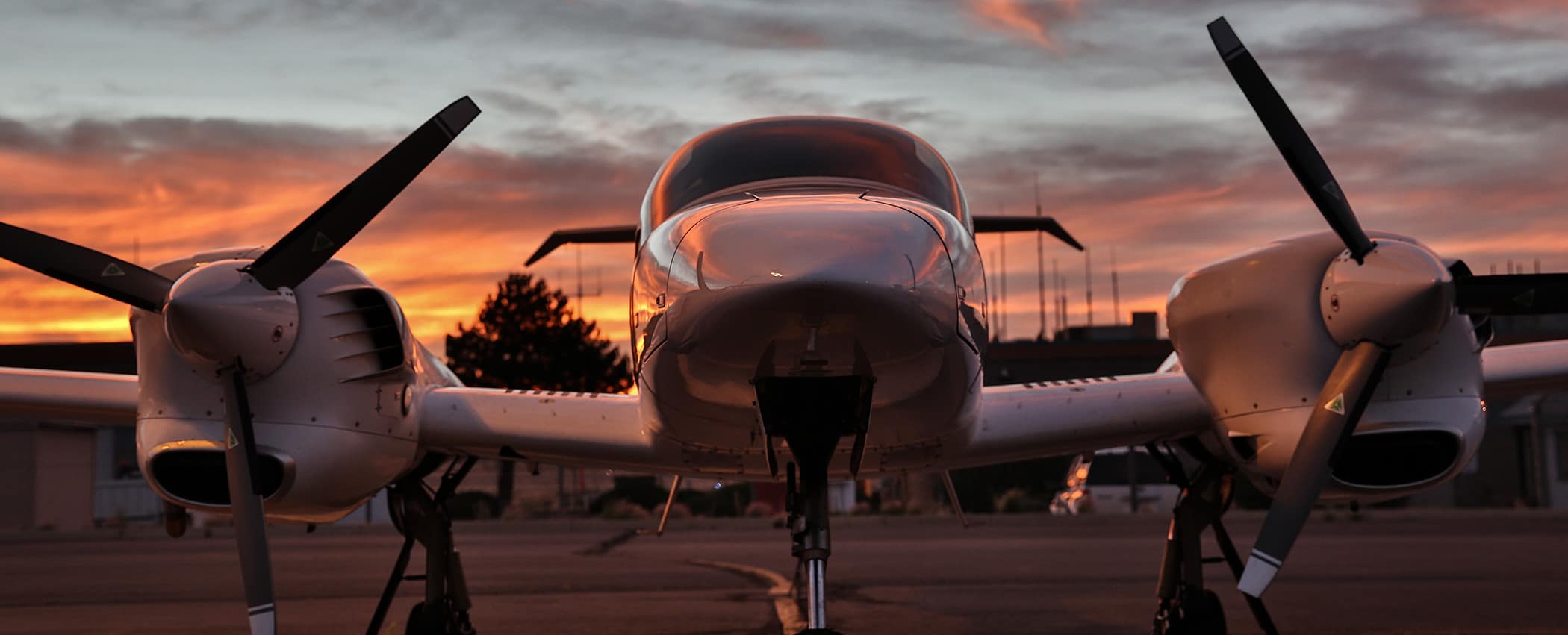
Embry-Riddle’s Daytona Beach Campus maintains a modern fleet of aircraft including Cessna 172s and Diamond DA42s and a host of advanced flight simulation devices with advanced visual systems.
Tracks/Specialties and/or Certificates
- This degree offers the option to participate in the Airbus Track.
- The program offers a multi-engine, instrument-rated commercial pilot, FAA-approved ATP-CTP.
Aeronautical Science – Fixed Wing Information
- Credits: 120
- Online or In-Person: In-Person
Professional Accreditation
The Aeronautical Science program is accredited by the Aviation Accreditation Board International (AABI).
Helpful Links
- Tour our Daytona Beach, Florida campus
- Discover the Department Faculty
- Explore the Fields of Study: Aviation & Space
- Find Related Clubs & Organizations
Student Learning Outcomes
Students will:
- Apply knowledge of mathematics, science, and applied sciences at various levels of education.
- Analyze and interpret data provided from various sources.
- Make positive contributions and function on multi-disciplinary teams in a crew type environment.
- Understand professional and ethical responsibility as it applies to the aviation industry.
- Communicate effectively using technical writing and verbal communication skills.
- Recognize the need for, and be able to engage in, lifelong learning.
- Reflect knowledge of contemporary issues affecting the aviation industry through their actions and attitudes.
- Use the techniques, skill, and modern technology necessary for professional practice.
- Possess an understanding of the national and international aviation environment.
- Apply pertinent knowledge in identifying and solving problems.
- Possess knowledge and understanding of business sustainability as it applies to aviation industry issues.
General Education Requirements
For a full description of Embry-Riddle General Education guidelines, please see the General Education section of this catalog. These minimum requirements are applicable to all degree programs.
| Communication Theory and Skills | 9 | |
| Lower-Level Humanities | 3 | |
| Lower-Level Social Sciences (PSY 101) | 3 | |
| Lower or Upper-Level Humanities or Social Sciences * | 3 | |
| Upper-Level Humanities or Social Sciences | 3 | |
| Computer Science Elective | 3 | |
| Mathematics (MA 111, MA 112) | 6 | |
| Physical and Life Sciences (PS 113, PS 113L, WX 201) | 7 | |
| Total Credits | 37 | |
Aeronautical Science Core
| ASC 101 | Aeronautical Science Student Success Seminar | 1 |
| AS 121 | Private Pilot Operations | 5 |
| AS 221 | Instrument Pilot Operations | 3 |
| AS 254 | Aviation Legislation | 3 |
| or AS 405 | Aviation Law | |
| AS 309 | Aerodynamics | 3 |
| AS 310 | Aircraft Performance | 3 |
| AS 311 | Aircraft Engines - Turbine | 3 |
| AS 321 | Commercial Pilot Operations | 3 |
| AS 350 | Domestic and International Navigation | 3 |
| AS 356 | Aircraft Systems and Components | 3 |
| AS 357 | Flight Physiology | 3 |
| AS 387 | Crew Resource Management | 3 |
| AS 408 | Flight Safety | 3 |
| AS 411 | Jet Transport Systems | 3 |
| AS 420 | Flight Technique Analysis | 3 |
| AS 435 | Electronic Flight Management Systems | 3 |
| AS 472 | Operational Applications in Aeronautical Science | 3 |
| BA 201 | Principles of Management | 3 |
| WX 301 | Aviation Weather | 3 |
| Total Credits | 57 | |
Flight Core Courses
| FA 121 | Private Single Flight | 1 |
| FA 221 | Instrument Single Flight | 1 |
| FA 321 | Commercial Single Flight | 1 |
| FA 323 | Commercial Multi Add On | 1 |
| Total Credits | 4 | |
Open Electives
| Upper Level Open Electives - 300-400 | 12 | |
| Open Electives - Any Level | 10 | |
| Total Credits | 22 | |
| Total Credit Hours | 120 | |
Airbus Track
Students who are selected to participate in this track will complete the final twelve credits (eighth semester) of the BSAS degree at an Airbus Americas Training facility in Miami, FL. Students will also have the potential to complete Airbus jet transition training and receive an A320 a type rating. Students in this track will take/receive credit for the following courses while training at the Airbus Training Facility. See Aeronautical Science Department for program requirements and application procedure.
| AS 411 | Jet Transport Systems | 3 |
| AS 420 | Flight Technique Analysis | 3 |
| AS 435 | Electronic Flight Management Systems | 3 |
| FA 420 | Airline Flight Crew Techniques and Procedures | 2 |
| FA 418 | Airline Transport Pilot Proficiency Development | 1 |
| Total Credits | 12 | |
Flight education is a continuous process that normally begins sometime during the student’s first year of attendance and will progress until culminating in a multi-engine commercial certificate with an instrument rating. The curriculum is designed to allow students to meet core objectives in a reasonable amount of time.
Various factors influence students’ progress. These factors include student academic preparation, student availability, student determination and dedication, the availability of aircraft and instructor pilots, and the cooperation of the weather. Consequently, some students will finish before others. After completing the core curriculum, students may take an additional semester or more to acquire additional advanced certificates and ratings.
Refer to the Undergraduate Academic Regulations and Procedures section for academic credit for flight training at other institutions. After matriculation to Embry-Riddle, all flight training must be completed on-campus to earn the Aeronautical Science degree.
Cooperative Education credits may only be used as open electives.
Suggested Plan of Study
| Year One | ||
|---|---|---|
| Credits | ||
| ASC 101 | Aeronautical Science Student Success Seminar | 1 |
| AS 121 | Private Pilot Operations | 5 |
| AS 221 | Instrument Pilot Operations | 3 |
| COM 122 | English Composition | 3 |
| FA 121 | Private Single Flight | 1 |
| FA 221 | Instrument Single Flight | 1 |
| MA 111 | Pre-Calculus for Aviation | 3 |
| MA 112 | Applied Calculus for Aviation | 3 |
| HU 14x Lower Level Humanities | 3 | |
| PSY 101 | Introduction to Psychology | 3 |
| WX 201 | Survey of Meteorology | 3 |
| Credits Subtotal | 29.0 | |
| Credits Total: | 29.0 | |
| Year Two | ||
|---|---|---|
| Credits | ||
| AS 309 | Aerodynamics | 3 |
| AS 321 | Commercial Pilot Operations | 3 |
| BA 201 | Principles of Management | 3 |
| COM 219 | Speech | 3 |
| COM 221 | Technical Report Writing | 3 |
| CS Elective | 3 | |
| FA 321 | Commercial Single Flight | 1 |
| HU/SS Lower or Upper Level Elective | 3 | |
| PS 113 | Introductory Physics I | 3 |
| PS 113L | Introductory Physics I Laboratory | 1 |
| WX 301 | Aviation Weather | 3 |
| Credits Subtotal | 29.0 | |
| Credits Total: | 58.0 | |
| Year Three | ||
|---|---|---|
| Credits | ||
| AS 254 | Aviation Legislation | 3 |
or AS 405
|
Aviation Law | |
| AS 310 | Aircraft Performance | 3 |
| AS 311 | Aircraft Engines - Turbine | 3 |
| AS 350 | Domestic and International Navigation | 3 |
| AS 356 | Aircraft Systems and Components | 3 |
| AS 357 | Flight Physiology | 3 |
| AS 387 | Crew Resource Management | 3 |
| AS 435 | Electronic Flight Management Systems | 3 |
| FA 323 | Commercial Multi Add On | 1 |
| Open Elective - Upper Level | 3 | |
| Open Elective - Any Level | 4 | |
| Credits Subtotal | 32.0 | |
| Credits Total: | 90.0 | |
| Year Four | ||
|---|---|---|
| Credits | ||
| AS 408 | Flight Safety | 3 |
| AS 411 | Jet Transport Systems | 3 |
| AS 420 | Flight Technique Analysis | 3 |
| AS 472 | Operational Applications in Aeronautical Science | 3 |
| HU/SS Upper Level Elective | 3 | |
| Open Electives - Upper Level | 9 | |
| Open Electives - Any Level | 6 | |
| Credits Subtotal | 30.0 | |
| Credits Total: | 120.0 | |
Get Started Now:
Summary
120 Credits
Estimate your tuition by using the Tuition Calculator
View Financial Aid Information
Learn about our General Education
Find out about transferring credits to this degree
Learn more about our Veterans & Military benefits
View our Academic Calendar
Reaching New Heights in Aviation
Daytona Beach, FL Campus

Spotlight
About Aeronautical Science - Flight at the Prescott, AZ Campus
The Bachelor of Science in Aeronautical Science degree at the Prescott Campus combines a four-year academic degree with flight training to prepare graduates for a career as a professional pilot. Graduates succeed in airline, corporate, commercial and military careers.
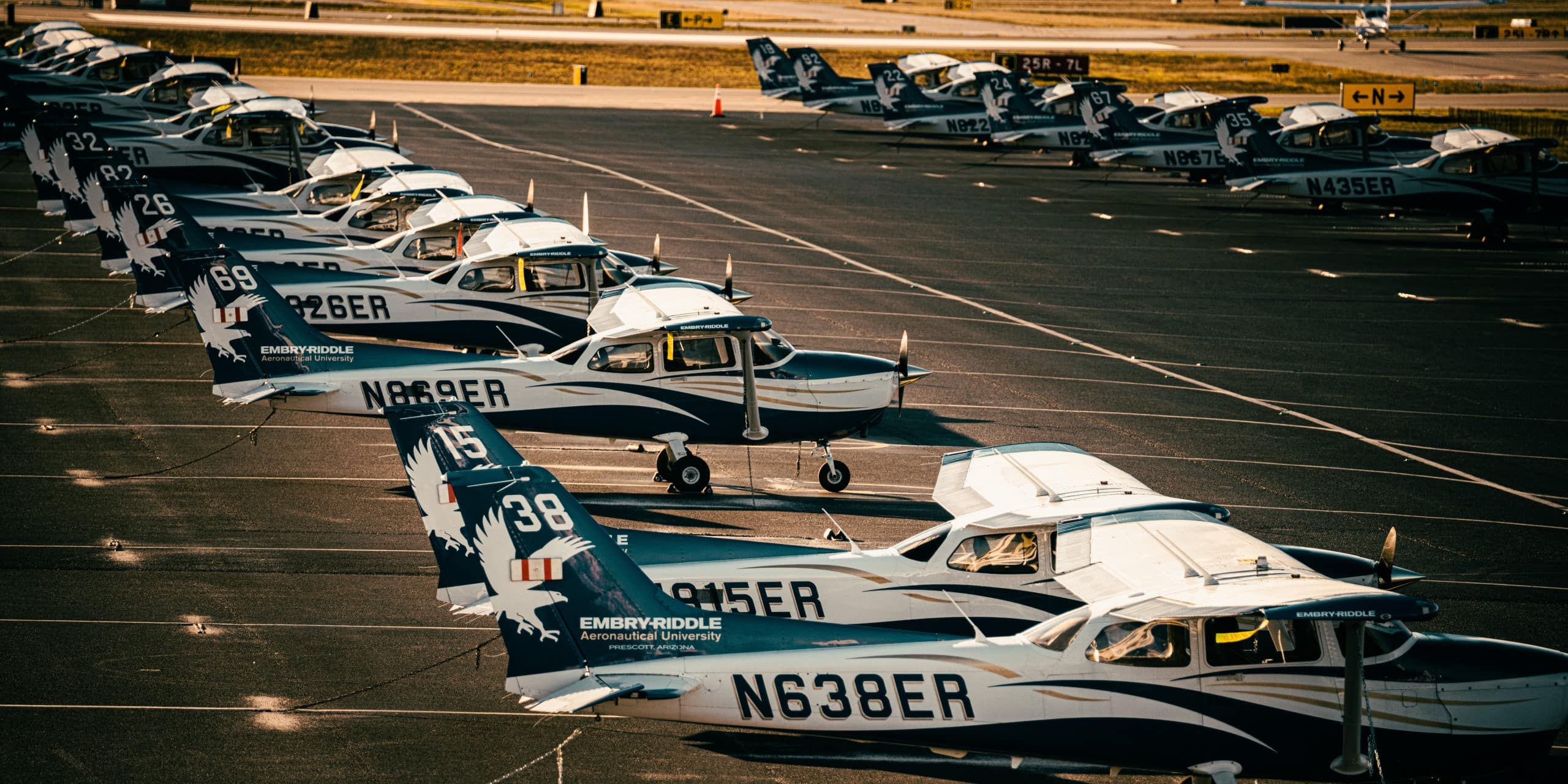
Prescott students attend classes in dynamic, aviation-related labs and facilities, housed in the Department of Aeronautical Science in the College of Aviation. Embry-Riddle has a fleet of Diamond DA42NGs and Cessna 172s located at Prescott Regional Airport, as well as a Super Decathlon for upset training.
Tracks/Specialties and/or Certificates
This degree offers two track options:
- Fixed Wing Professional Pilot Flight Track
- This track offers a FAA Commercial Pilot Certificate
- Fixed Wing Flight Education Track
- This track offers a FAA Commercial Pilot and Flight Instructor Certificate
Aeronautical Science – Fixed Wing Information
- Capstone Requirement: 9 Credit
- Credits: 120
- Online or In-Person: In-Person
Professional Accreditation
The Aeronautical Science – Fixed Wing program is accredited by the Aviation Accreditation Board International (AABI).
Helpful Links
- Tour our Prescott, Arizona campus
- Discover the Department Faculty
- Explore the Fields of Study: Aviation & Space
- Find Related Clubs & Organizations
Student Learning Outcomes
Students will:
- Apply knowledge of mathematics, science, and applied sciences at various levels of education.
- Analyze and interpret data provided from various sources.
- Make positive contributions and function on multi-disciplinary teams in a crew type environment.
- Understand professional and ethical responsibility as it applies to the aviation industry.
- Communicate effectively using technical writing and verbal communication skills.
- Recognize the need for, and be able to engage in, lifelong learning.
- Reflect knowledge of contemporary issues affecting the aviation industry through their actions and attitudes.
- Use the techniques, skill, and modern technology necessary for professional practice.
- Possess an understanding of the national and international aviation environment.
- Apply pertinent knowledge in identifying and solving problems.
- Possess knowledge and understanding of business sustainability as it applies to aviation industry issues.
Degree Requirements
The Bachelor of Science degree in Aeronautical Science may be attained in eight semesters. To earn the degree, successful completion of a minimum of 120 credit hours is required. The purpose of the Aeronautical Science degree program is to prepare the graduate for a productive career as a professional pilot and responsible citizenship in support of the aviation and aerospace industries. Upon completion of the curriculum, the student will possess an FAA Commercial Pilot Certificate (Professional Pilot Track) with multi-engine rating or FAA Commercial Pilot and Flight Instructor Certificate (Flight Education Pilot Track). Optional advanced flight training includes upset recovery training, certification as a flight instructor and instrument flight instructor, and training as a flight crew member in a jet transport aircraft.
Students pursuing the Aeronautical Science degree will choose either the Professional Pilot or Flight Education. All students must complete the general education courses, Professional Pilot core courses, and the courses required to complete one specialization to earn the Aeronautical Science degree.
Flight education is a continuous process that normally begins sometime during the student’s first year of attendance and will progress until culminating in a multi-engine commercial certificate with an instrument rating. The curriculum is designed to allow students to meet core objectives in a reasonable amount of time.
Various factors influence student progress. These factors include student academic preparation, student availability, student determination and dedication, the availability of aircraft and instructor pilots, and the cooperation of the weather. Consequently, some students will finish before others. After completing the flight core curriculum, students may take an additional semester or more to acquire additional advanced certificates and ratings, including certified flight instructor airplane and instrument, and/or they may enroll in the Airline Flight Crew Techniques and Procedures or the Airline Dispatch Operations course.
After matriculation at Embry-Riddle Aeronautical University, all flight training for credit must be completed at Embry-Riddle. Only under extreme extenuating circumstances will ERAU students be allowed to complete any off-campus training for credit after matriculation. Students desiring to do so must obtain written approval in advance from the Flight Department Chair. The credit will be awarded as advanced standing, and the procedures for requesting credit when training is completed will be specified in the written approval (Off Campus Authorization Form).
Aeronautical Science students will be awarded credit for FAA certificates held prior to matriculation to Embry-Riddle and may be approved to complete partial training towards a certificate or rating if flight training from an appropriately rated instructor was logged prior to matriculation. If FAA certificates are held, this training must have occurred after the attainment of the most recent certificate for which credit is granted. Except as provided above, after a student matriculates, all flight training must be completed at Embry-Riddle. In all cases, students must satisfactorily complete at least one flight course on campus after advanced standing is awarded. See the Flight Department chair as appropriate concerning exact credit.
Enrollment in flight courses requires proof of U.S. citizenship or a Department of Justice background check for international students. Please see the Aviation Transportation and Security Act (ATSA) under the Admissions section of this catalog.
Program Requirements
General Education
Embry-Riddle degree programs require students to complete a minimum of 36 hours of General Education coursework. For a full description of Embry-Riddle General Education guidelines, please see the General Education section of this catalog.
Students may choose other classes outside of their requirements, but doing so can result in the student having to complete more than the degree's 120 credit hours. This will result in additional time and cost to the student.
| Communication Theory and Skills | 9 | |
| Computer Science/Information Technology Elective | 3 | |
| Mathematics | 6 | |
| Physical and Life Sciences (Natural Sciences) | 6 | |
| Humanities and Social Sciences | 12 | |
3 hours of Lower-Level Humanities | ||
3 hours of Lower-Level Social Science | ||
3 hours of Lower-Level or Upper-Level Humanities Social Science | ||
3 hours of Upper-Level Humanities or Social Science | ||
| Total Credits | 36 | |
Aeronautical Science Core (91 Credits)
The following course of study outlines the quickest and most cost-efficient route for students to earn their B.S. in Aeronautical Science. Students are encouraged to follow the course of study to ensure they complete all program-required courses and their prerequisites within four years.
Courses in the core with a # will satisfy your general education requirements.
| Aeronautical Science, Air Traffic, Safety Science, or Weather Upper-Level Elective | 3 | |
| AS 121 | Private Pilot Operations | 5 |
| AS 221 | Instrument Pilot Operations | 3 |
| AS 221L | Instrument Pilot Operations Laboratory | 1 |
| AS 309 | Aerodynamics | 3 |
| AS 310 | Aircraft Performance | 3 |
| AS 311 | Aircraft Engines - Turbine | 3 |
| AS 321 | Commercial Pilot Operations | 3 |
| AS 321L | Commercial Pilot Operations Laboratory | 1 |
| AS 350 | Domestic and International Navigation | 3 |
| AS 356 | Aircraft Systems and Components | 3 |
| AS 357 | Flight Physiology | 3 |
| AS 380 | Pilot Career Planning and Interviewing Techniques | 1 |
| AS 387 | Crew Resource Management | 3 |
| AS 402 | Airline Operations | 3 |
| or AS 410 | Airline Dispatch Operations | |
| AS 405 | Aviation Law | 3 |
| AS 408 | Flight Safety | 3 |
| BA 201 | Principles of Management | 3 |
| General Education - Communication Theory and Skills # | 9 | |
| General Education - Computer Science/Information Technology Elective # | 3 | |
| General Education - Humanities Lower-Level Elective # | 3 | |
| General Education - Humanities or Social Science Upper-Level Elective # | 3 | |
| General Education - Social Science Lower-Level Elective # | 3 | |
| MA 111 | Pre-Calculus for Aviation # | 3 |
| MA 112 | Applied Calculus for Aviation # | 3 |
| PSY 101 | Introduction to Psychology *# | 3 |
| or PSY 222 | Introduction to Industrial/Organizational Psychology | |
| PS 113 | Introductory Physics I # | 3 |
| WX 201 | Survey of Meteorology # | 3 |
| WX 203L | Survey of Meteorology Laboratory | 1 |
| WX 301 | Aviation Weather | 3 |
| UNIV 101 | College Success | 1 |
Capstone Requirements (9 Credits)
| AS 411 | Jet Transport Systems | 3 |
| AS 420 | Flight Technique Analysis | 3 |
| AS 435 | Electronic Flight Management Systems | 3 |
Choose one Flight Track - Professional Pilot or Flight Education
Professional Pilot Flight Track (20 Credits)
| FA 121 | Private Single Flight | 1 |
| FA 221 | Instrument Single Flight | 1 |
| FA 321 | Commercial Single Flight ** | 1 |
| FA 323 | Commercial Multi Add On | 1 |
| Open Electives | 16 | |
Flight Education Track (20 Credits)
| AS 421 | Flight Instructor Ground Course | 4 |
| FA 121 | Private Single Flight | 1 |
| FA 221 | Instrument Single Flight | 1 |
| FA 321 | Commercial Single Flight ** | 1 |
| FA 421 | Flight Instructor Rating | 1 |
| Open Electives | 12 | |
| Total Credits | 120 | |
- *
PSY 222 Fall Run Only
- **
If a student possesses an FAA Commercial Certificate in a category or class other than Airplane, Single Engine Land, the student will be enrolled in FA 399 in lieu of FA 321.
- #
General Education Courses
All Army ROTC students are required to complete SS 321 - U.S. Military History 1900-Present (3 credits) in order to commission.
Suggested Plan of Study
| Freshman Year | ||
|---|---|---|
| Fall | Credits | |
| AS 121 | Private Pilot Operations | 5 |
| COM 122 | English Composition | 3 |
| FA 121 | Private Single Flight | 1 |
| MA 111 | Pre-Calculus for Aviation | 3 |
| UNIV 101 | College Success | 1 |
| Credits Subtotal | 13.0 | |
| Spring | ||
| CS 118 | Fundamentals of Computer Programming | 3 |
or IT 109
|
Introduction to Computers and Applications | |
| Humanities Lower-Level Elective | 3 | |
| MA 112 | Applied Calculus for Aviation | 3 |
| PS 113 | Introductory Physics I | 3 |
| Social Science Lower-Level Elective | 3 | |
| Credits Subtotal | 15.0 | |
| Sophomore Year | ||
| Fall | ||
| AS 221 | Instrument Pilot Operations | 3 |
| AS 221L | Instrument Pilot Operations Laboratory | 1 |
| AS 309 | Aerodynamics | 3 |
| AS 357 | Flight Physiology | 3 |
| FA 221 | Instrument Single Flight | 1 |
| WX 201 | Survey of Meteorology | 3 |
| WX 203L | Survey of Meteorology Laboratory | 1 |
| Credits Subtotal | 15.0 | |
| Spring | ||
| AS 310 | Aircraft Performance | 3 |
| Communications Elective | 3 | |
| Open Electives | 6 | |
| WX 301 | Aviation Weather | 3 |
| Credits Subtotal | 15.0 | |
| Junior Year | ||
| Fall | ||
| AS 321 | Commercial Pilot Operations | 3 |
| AS 321L | Commercial Pilot Operations Laboratory | 1 |
| AS 356 | Aircraft Systems and Components | 3 |
| Communications Elective | 3 | |
| FA 321 | Commercial Single Flight | 1 |
| Open Elective | 3 | |
| PSY 101 | Introduction to Psychology | 3 |
| Credits Subtotal | 17.0 | |
| Spring | ||
| AS 311 | Aircraft Engines - Turbine | 3 |
| AS 350 | Domestic and International Navigation | 3 |
| AS 380 | Pilot Career Planning and Interviewing Techniques | 1 |
| AS 387 | Crew Resource Management | 3 |
| AS 411 | Jet Transport Systems | 3 |
| BA 201 | Principles of Management | 3 |
| FA 323 | Commercial Multi Add On | 1 |
| Credits Subtotal | 17.0 | |
| Senior Year | ||
| Fall | ||
| Aeronautical Science, Air Traffic, Safety Science, or Weather Upper-Level Elective | 3 | |
| AS 405 | Aviation Law | 3 |
| AS 435 | Electronic Flight Management Systems | 3 |
| Humanities or Social Science Upper-Level Elective | 3 | |
| Credits Subtotal | 12.0 | |
| Spring | ||
| AS 402 | Airline Operations | 3 |
or AS 410
|
Airline Dispatch Operations | |
| AS 408 | Flight Safety | 3 |
| AS 420 | Flight Technique Analysis | 3 |
| Open Electives | 7 | |
| Credits Subtotal | 16.0 | |
| Credits Total: | 120.0 | |
Get Started Now:
Summary
120 Credits
Estimate your tuition by using the Tuition Calculator
View Financial Aid Information
Learn about our General Education
Find out about transferring credits to this degree
Learn more about our Veterans & Military benefits
View our Academic Calendar
The Aeronautical Science Fixed Wing Program
Prescott, AZ Campus
Spotlight
RELATED DEGREES
You may be interested in the following degrees: